
Local Business Critical Support Services
When minutes matter—local engineers, priority escalation, and assured spares.
Why EEMC for Critical Support
On-site speed, assured parts, and SLAs tied to business impact.
Local & Rapid
Engineers near your sites for fast triage and on-site intervention.
Assured Spares
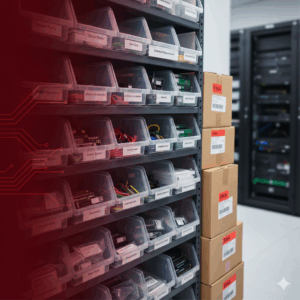
Advance replacement and buffer stock to minimize downtime.
Business-Aligned SLAs
Clear response/resolution targets with direct escalation paths.
What’s Included
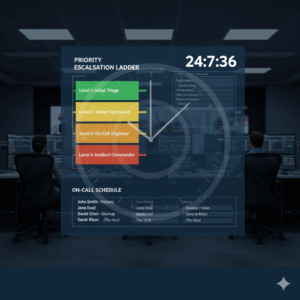
- 24×7 priority response & escalation
- Local engineering presence for rapid on-site response
- Spare parts availability & advance replacement
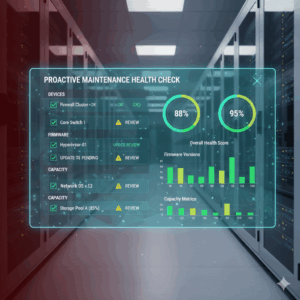
- Proactive maintenance & health checks
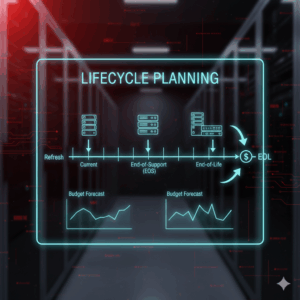
- Lifecycle planning for EOL/EOS equipment

How Critical Support Operates
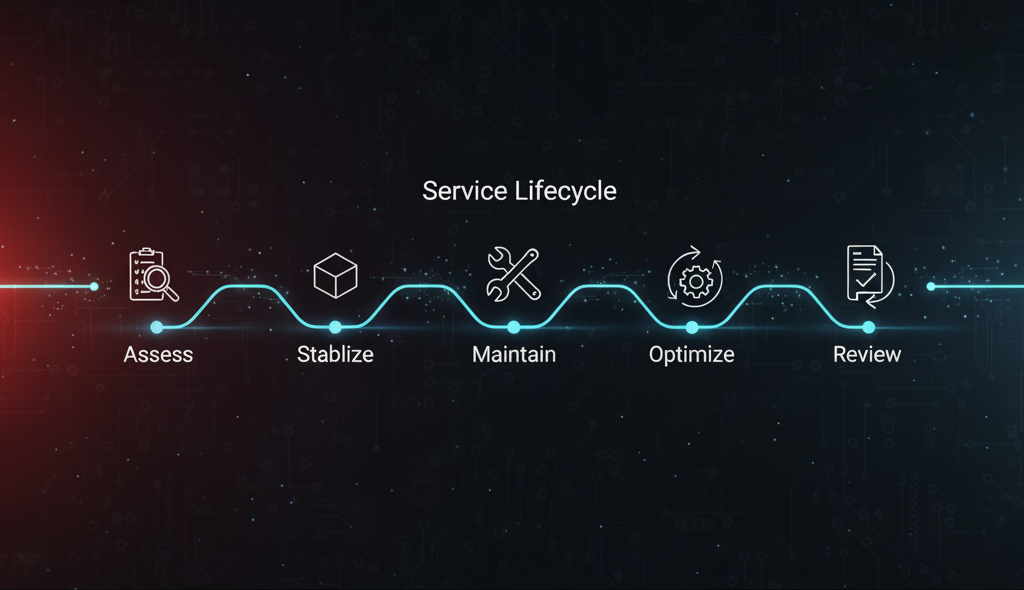
A tight cycle that keeps critical systems stable.
- Assess & Stage: site survey, spare kit definition, access & contacts.
- Monitor & Detect: telemetry intake, alert routing, on-call roster.
- Respond & Escalate: remote triage, dispatch, vendor escalation.
- Recover & Replace: advance replacement, config restore, verification.
- Review & Plan: incident review, lifecycle & refresh planning.
Response Tiers
Pick the right assurance level per site or asset group.
Priority
Business hours, rapid remote triage, on-site next business day, spare pool access.
Priority+
08:00–22:00, 4-hour remote response, same-day on-site (metro), advance replacement.
24×7 Critical
Round-the-clock hotline, 1-hour remote response, 2–4h on-site (where available), dedicated spares.
Value You Can Measure
Metrics reflect Local Business–Critical Support Services; actual SLAs may vary by contract and site.